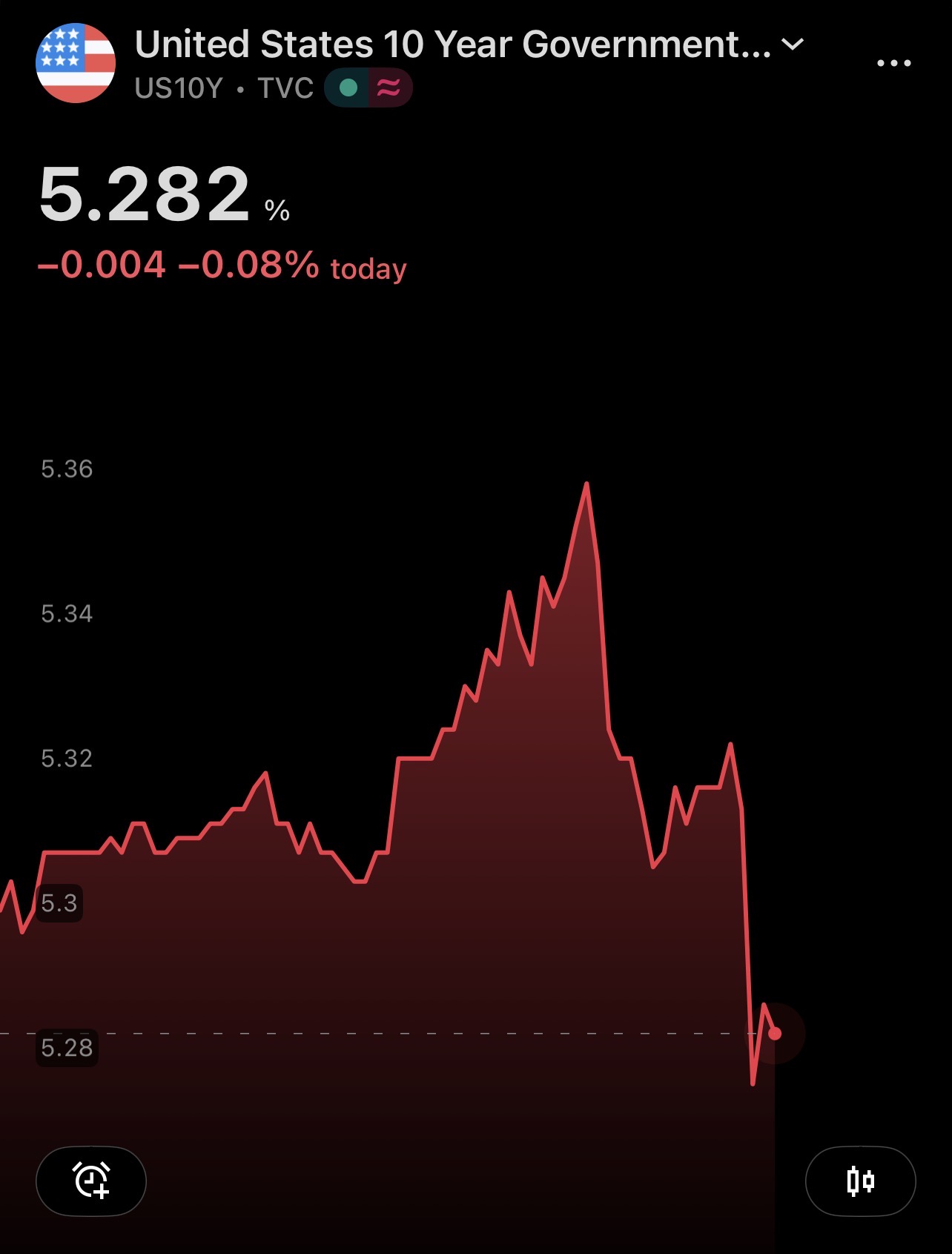
The U.S. 10-year Treasury yield reversed lower after a strong $39 billion auction of reopened 10-year notes showed solid demand for longer-dated government debt.
Earlier in the session, the 10-year yield had climbed as high as roughly 5.36%, its highest level in about 24 years, as higher oil prices and inflation concerns pushed investors out of bonds.
The auction changed the tone.
Strong demand for the new 10-year supply helped long-end yields turn lower, indicating that investors were willing to buy aggressively at current yield levels.
That is important because recent Treasury auctions had raised concerns that investors might demand increasingly large concessions to absorb heavy U.S. government borrowing.
The Treasury’s ongoing buyback program is also providing liquidity support to older, less-liquid securities, although the immediate reversal in yields on Wednesday appears to have been driven primarily by the strong 10-year auction rather than the buyback operation itself.
For stocks, lower long-term yields are generally supportive, particularly for technology and other high-valuation growth shares that are sensitive to changes in discount rates.
Markets are now waiting for the Federal Reserve’s September meeting minutes for further clues on whether policymakers see the recent rise in long-term yields as enough financial tightening to reduce the need for additional rate hikes.